Your people bring judgment and craft. mnemur turns that into AI you own, quickly deployable across your workflows and tools, with your policies enforced — including confidentiality — and full auditability.
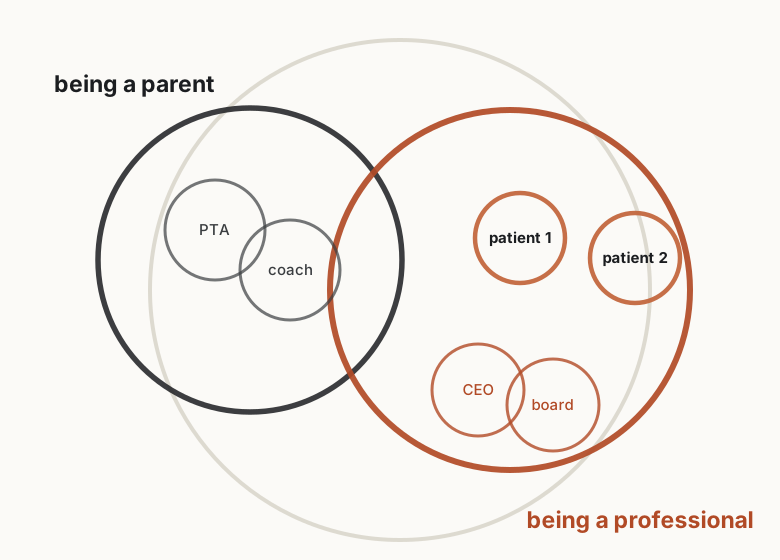
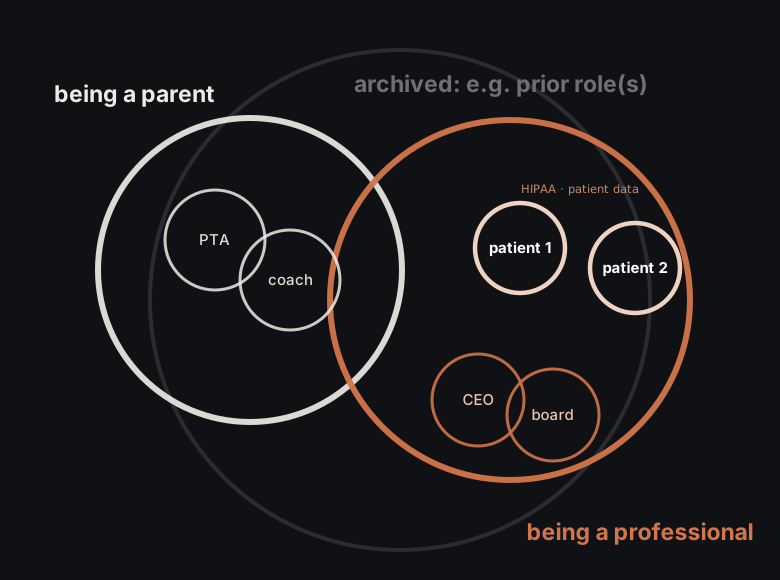
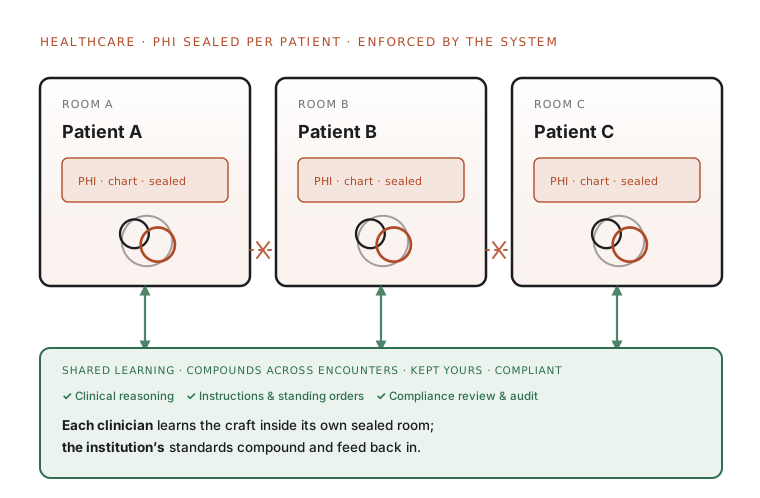
At any time we hold many different contexts, and keep them apart without thinking about it, while learning from each:
We keep these apart with law, privilege, professional duty, and plain judgment. Today's AI pools everything together and forgets the walls, so it can't safely touch your most sensitive work. What it learns from you also belongs to the vendor.
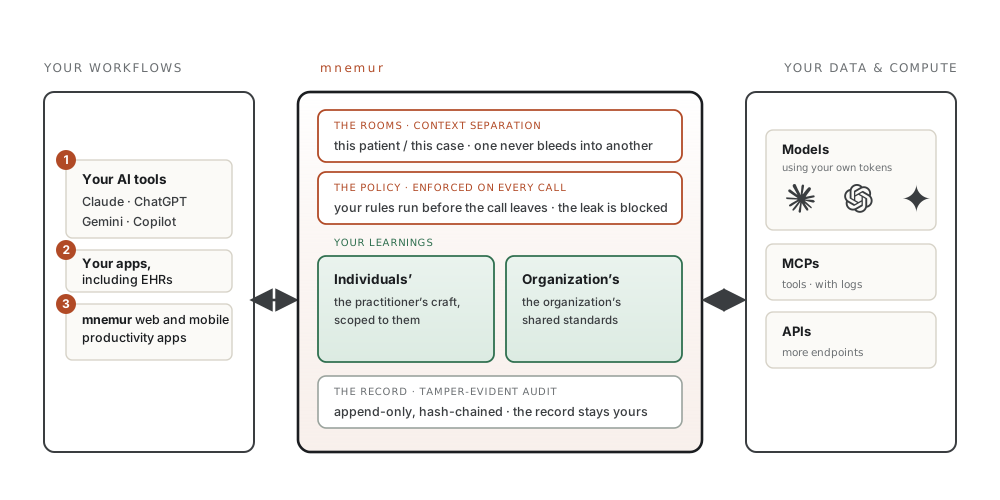
mnemur gives AI the boundaries we already live by: it keeps every context in its own room, compounds your learnings across them, and keeps them yours, portable to the next model.
One agent, many sealed rooms — the convenience of a single assistant, with the walls your work requires. Even single-agent shops are converging on one assistant across all their work; Sierra (Bret Taylor’s team) calls it “agent, singular.” mnemur keeps that convenience and adds the walls high-stakes work can’t skip.
Keep using your tools — Claude, ChatGPT, Gemini, and your own apps:
The AI learns the person's craft and surfaces the best practices the whole organization can adopt.
Both compound in your system, both stay yours, and both stay portable to the next model or tool.
Your policies — the walls between contexts, which model or person may see each class of data, which actions may fire unattended, what it may decide about money, when AI involvement is named, how it writes as you, and the rest of what you set — all enforced before the call leaves, not audited after the fact.
No new app to adopt: it works inside the assistants and apps your people already open, so it lands on day one and meets them where the work already happens.A mnemur productivity app is on the way.
The tools you use will keep changing; what you build around them is what lasts. When LangChain kept the model the same and improved only this surrounding layer, the results jumped +13.7 points (52.8→66.5% on Terminal-Bench 2.0): the layer, not the model, carried the gain. And work you can check is work you can trust, the idea behind Jason Wei’s Verifier’s Law. That lasting layer is what mnemur is, and it’s designed around your workflows:
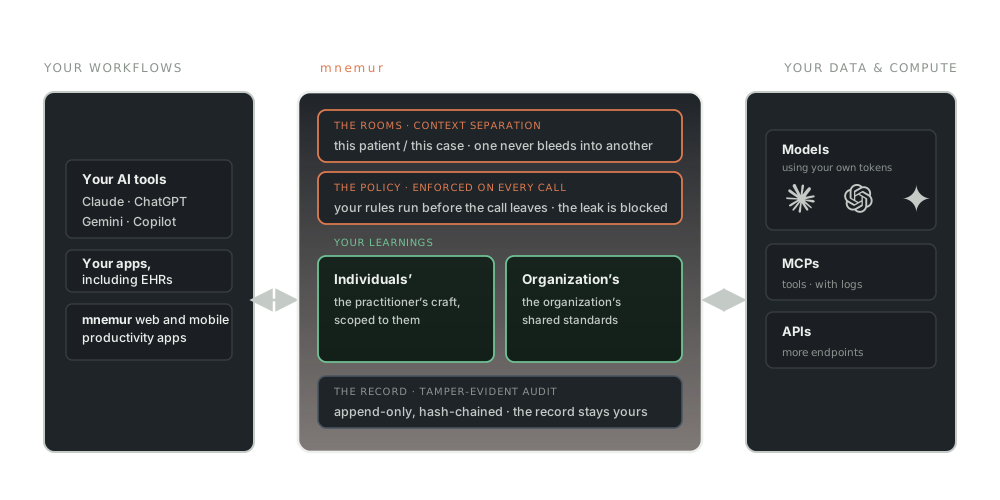
Your people already use AI to reason through a case and draft the work. Today they do it on someone else's surface, with the confidential part masked out in their head, which not only creates organizational risk, but leaks learnings that could compound as your own IP. mnemur lets them do it on the real thing: behind your wall, under your rules, with the learning kept yours.
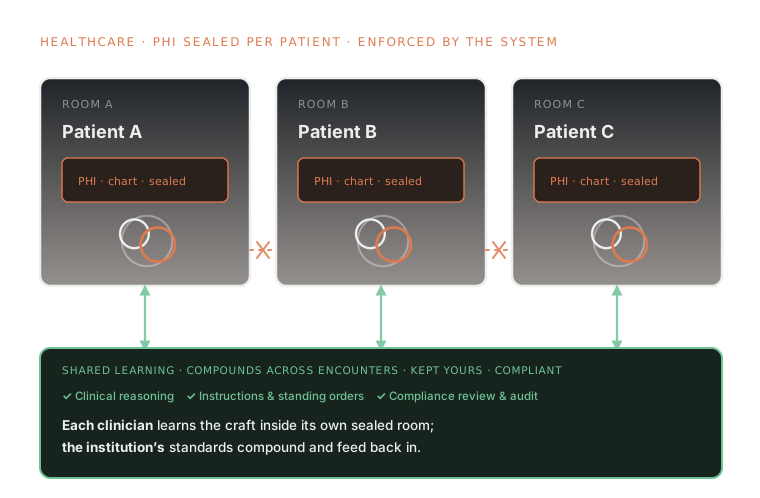
Clinicians already lean on AI to look up the evidence, reason through a case, and draft the note. Today they do it through a lookup app like OpenEvidence — masking the PHI by hand on the fly, then copy-pasting the answer back — or an ambient scribe like Abridge, embedded in the record yet still improving the vendor's product, not yours.
Somehow that gets accepted, despite the PHI risk, the learning that leaks to the vendor instead of compounding for you, and how little of the process you can govern.
Lawyers, bankers, and consultants already use AI to research, reason, and draft. Today they do it on an outside surface — masking the privileged or restricted detail by hand on the fly, then copy-pasting the answer back. Somehow that gets accepted, despite the confidentiality risks, the learning that leaks to the vendor instead of compounding for you, and how little of the process you can govern.
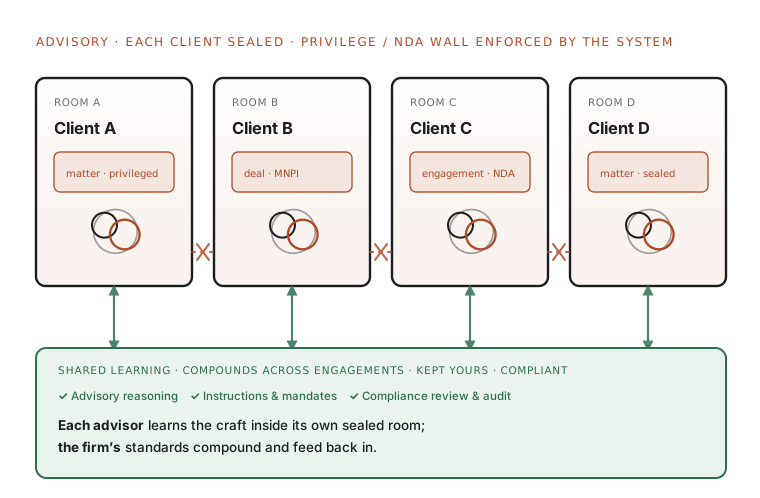
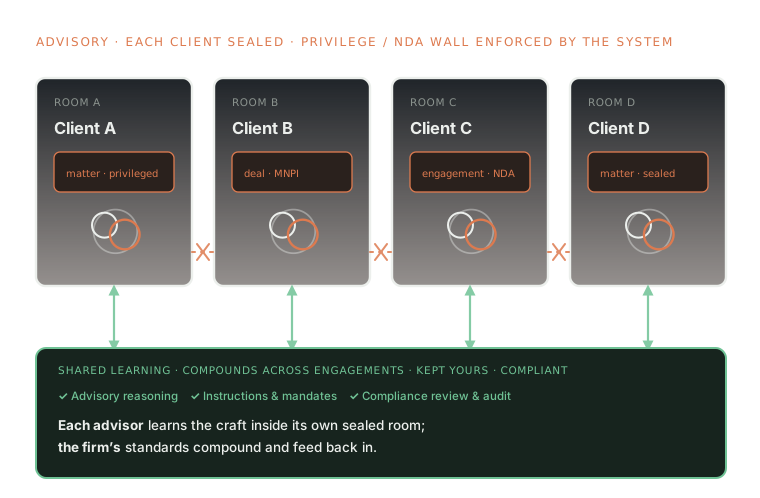
The shape isn't limited to medicine and advisory. It fits any field where one body of work must stay sealed from the next:
Every model call passes through the gateway, with your boundaries and rules enforced before anything leaves, and a tamper-evident record behind it. Next, as agents do more of the work unattended, comes the verifier: an independent check that the finished work followed policy and honored the boundary.
Receipts, not claims: we are aligning the audit records with OVERT, an emerging open standard for verification receipts — adopting the standard rather than inventing a rival, so your evidence stays checkable by third parties.
Plain, versioned policy documents — yours to read, diff, and carry.
Loaded into the model at the start of every session, in hierarchy order.
Deny rules, budgets, and a tamper-evident audit run at the gateway on every call.
An independent checker re-checks the finished work — the doer never grades itself.
This is the pattern serious agent teams converge on: Sierra (Bret Taylor’s team) built an internal MCP gateway that “enforces policy at every tool call.” mnemur productizes that same enforcement seat — cross-provider, and owned by you, not locked to one vendor’s stack.
Left on their own, AI agents tend to skip their own double-check. LangChain found they “don’t have a natural tendency” to stop and verify. So mnemur builds the check in: it does the work in a way that can be verified, then verifies it. That’s the principle behind Jason Wei’s Verifier’s Law: what you can check, you can trust.
We intend to open-source our system components over time, and we'll name each one as it's ready.
We stand the system up inside your organization and codebase with you, hands-on: fully custom, fully yours, with our guidance the whole way. We run our own work through it every day.
We run it inside your perimeter, under your guardrails and audit requirements. The learning still lives in your store, and you still own it.
Run mnemur as services on your own infrastructure, with our support — the learning store, the policies, and the audit all stay on your side.